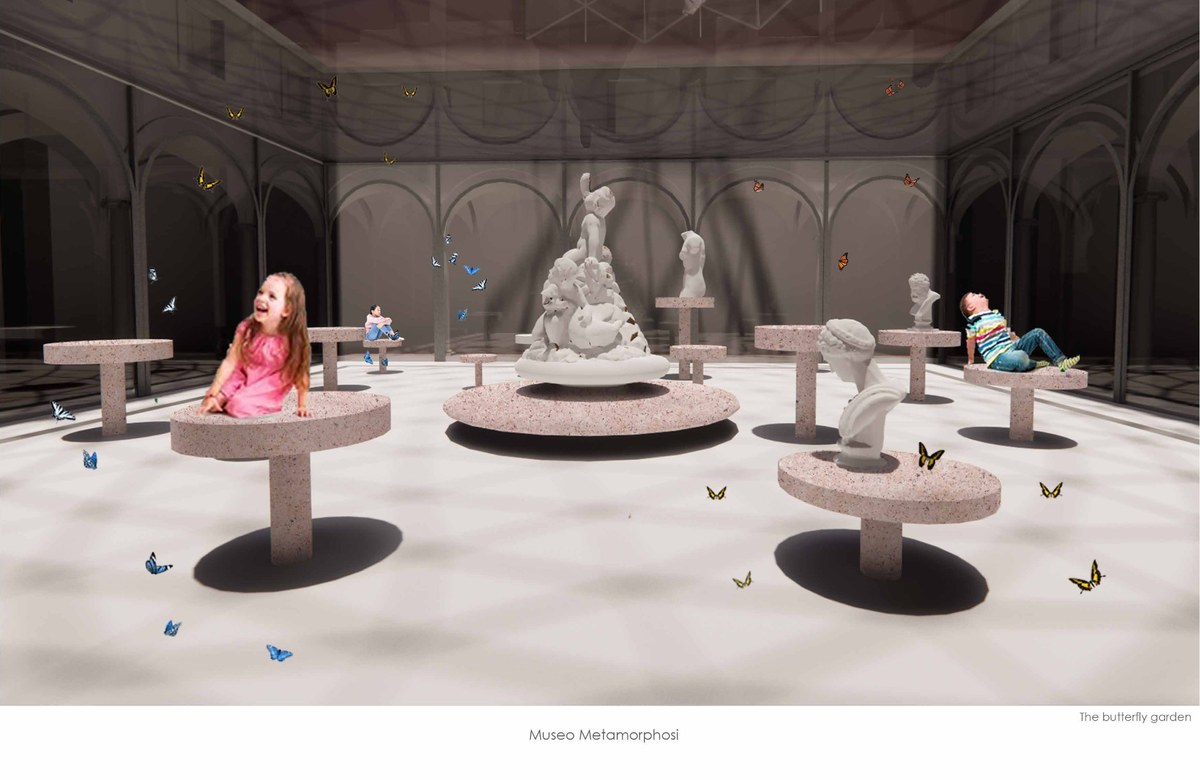
The Ospedale degli Innocenti in Florence is one of the most significant buildings in the history of Western architecture — Brunelleschi's first major commission, begun in 1419, a foundational example of Early Italian Renaissance. It has been an orphanage, a shelter for refugees, a UNICEF headquarters. It currently operates as a museum. The question we were asked to answer was deceptively simple: can we preserve historical and cultural places by looking forward?
The Problem with Reverence
Conservation architecture has a tendency to treat historic buildings as objects to be frozen rather than places to be inhabited. The instinct is to protect, to restore, to return things to some imagined original state. But the Ospedale has never been a static thing. It has been constantly, restlessly in transformation — functionally, programmatically, spatially. Its story is one of metamorphosis.
To design for it as though it needed to be preserved in amber would be, paradoxically, a betrayal of its history. The building's identity is change itself.
"The most faithful act of conservation is sometimes the most radical act of transformation."
The Keywords: Movement · Colour · Play · Transformative
These four words became the design brief. They emerged from thinking about the building's original users — infants, children, people at the beginning of life — and the idea that the museum should reconnect visitors to that quality of attention: the wide-eyed, un-jaded curiosity of childhood.
The spaces were conceived around this: movement through ramps and spatial sequences that encourage bodies to be active rather than reverential; colour introduced through bold palette choices that acknowledge the building's history of painted surfaces while pushing them into contemporary territory; play as a spatial condition, not just a programme — elements that can be reconfigured, climbed, inhabited differently at different times; transformation as the central concept, embodied in the butterfly motif that runs through the courtyard design.
The Butterfly Court
The main courtyard — Brunelleschi's defining space, the loggia with its elegant arcade — became the heart of the proposal. The design introduces modular circular pedestals at varying heights, aligned with the colonnade, that function as seating, display plinths, and sculptural elements. Their random placement echoes the pattern of a butterfly landing — unpredictable, organic, alive within a very precise geometric container.
The juxtaposition was deliberate. The building provides the rigour; the intervention provides the life. Neither overwhelms the other.
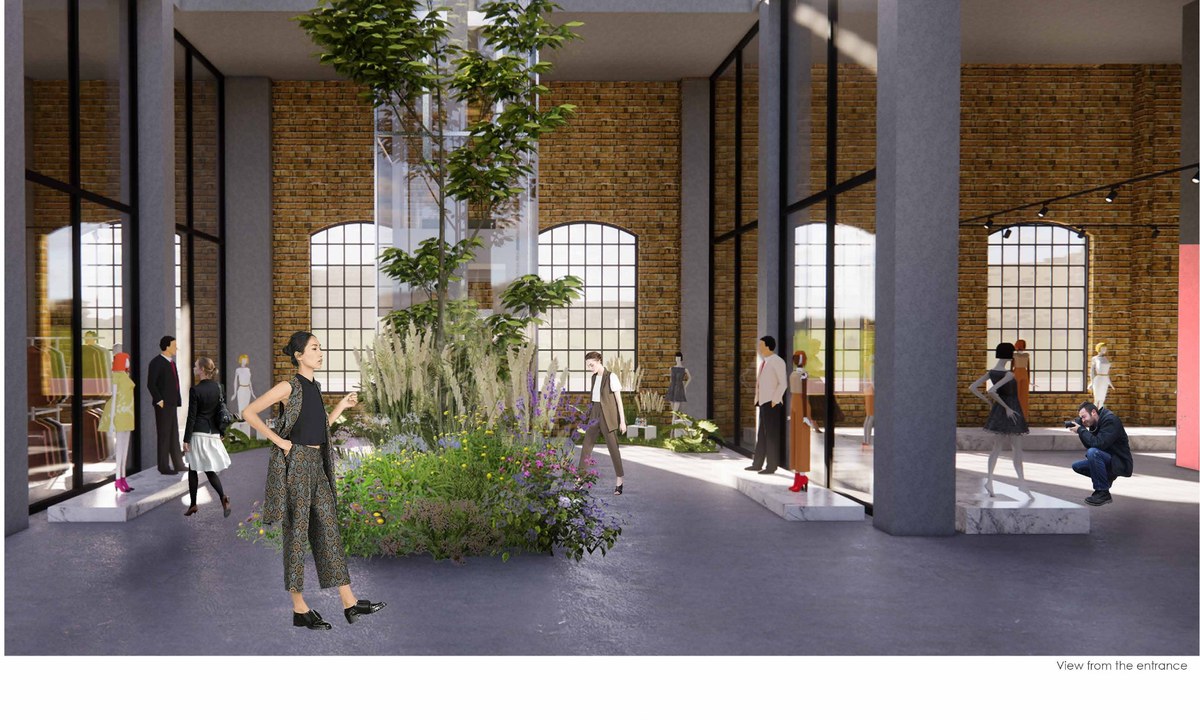
What Playfulness Means in a Historic Context
There is a fear, in conservation circles, of anything that looks like it is not serious. Play feels like the opposite of scholarship. Colour feels like the opposite of restraint. But I think this is a false opposition, and a damaging one.
The buildings we remember — the ones that survive in cultural memory, that continue to generate meaning across centuries — are not the most restrained ones. They are the ones that took a position, made a choice, committed to a vision. The Ospedale itself was radical for its time. Brunelleschi was not playing it safe.
To add to such a building requires a similar courage. Not the courage of loudness, but the courage of clarity — knowing what you are doing and why, and doing it completely. The worst outcomes in conservation are always the timid ones: the interventions that are too small to read, too apologetic to register, too reverent to mean anything.
The Wider Argument
I came away from the Museo Metamorfosi project with a conviction that has only deepened since: that the role of the architect in historic buildings is not to disappear, but to respond. To enter into a dialogue with the existing fabric, bring a contemporary perspective, and produce something that neither erases the past nor is imprisoned by it.
History can be playful. It just takes the willingness to take it seriously enough to play.